


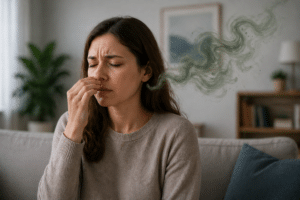
 Smelling smoke that isn’t there can be confusing and worrying. This experience has a medical name: phantosmia. It refers to the detection of odors that don’t exist in the environment.
Phantosmia often results from several medical conditions that affect the nose, sinuses, or brain. The phantom smell of smoke ranks among the most common types people report. These false odors can appear occasionally or persist for extended periods.
Understanding the medical causes behind phantom smoke smells helps people know whether they need to see a doctor. The condition may stem from issues in the nasal passages, problems with the nervous system, or damage to areas of the brain that process smell. Most cases have identifiable causes that doctors can address through proper diagnosis and treatment.
Sinus infections cause irritated olfactory nerves
Sinus infections can irritate the olfactory nerves and lead to unusual smell experiences. The inflammation blocks normal airflow and prevents odor molecules from reaching smell receptors properly. This disruption sometimes causes the nerves to send incorrect signals to the brain.
People with sinus infections who report smelling smoke when there is none present in the room are experiencing a common type of phantom odor. The swollen nasal passages and excess mucus create pressure on the olfactory epithelium. This pressure can damage the delicate nerve cells responsible for smell detection.
Repeated sinus infections increase the risk of nerve irritation over time. The constant inflammation may cause structural changes to the smell receptors. These changes affect how the nerves process scent information and send it to the brain.
Bacterial, viral, or fungal infections all trigger similar problems with smell perception. The body’s immune response creates swelling that physically blocks and irritates the olfactory system. Most phantom smells from sinus infections resolve after the infection clears.
Neurological disorders such as migraines
Migraines can trigger phantom smoke smells in some people. These false odors occur as part of the migraine aura, which happens before or during a migraine attack. The brain processes smell signals incorrectly, creating sensations of odors that don’t exist.
Phantom smells linked to migraines may appear in one or both nostrils. Some people experience these false odors every time they have a migraine. Others only notice them occasionally.
The phantom smells can vary from person to person. Some detect smoke or burning odors. Others might smell different scents altogether. These olfactory hallucinations typically fade once the migraine passes.
People with chronic migraines face a higher risk of experiencing phantom smells. The false odors can feel disorienting and may add to the discomfort of the migraine itself. Anyone who experiences phantom smells with migraines should discuss these symptoms with a doctor.
Nasal polyps obstructing normal smell function
Nasal polyps are soft, painless growths that develop inside the nose or sinuses. These growths are not cancerous, but they can block normal airflow and affect how smell signals reach the brain.
Large polyps or groups of polyps can prevent odor molecules from reaching the smell receptors in the nose. This obstruction changes how the nose processes smells. As a result, the brain may receive confused or incorrect signals about odors.
The polyps also change the composition of mucus in the nasal passages. This altered mucus makes it harder for scent molecules to travel properly. The combination of physical blockage and mucus changes can lead to phantom smells, including the smell of smoke.
People with nasal polyps often experience other symptoms too. They may have trouble breathing through the nose, lose their sense of smell completely, or get frequent sinus infections. These issues work together to disrupt the normal function of the olfactory system.
Post-viral olfactory dysfunction following respiratory infections
Viral respiratory infections can damage the sense of smell, a condition doctors call post-viral olfactory dysfunction. This problem affects a large number of people who get sick with viruses that attack the upper respiratory tract. The virus appears to harm the special tissue in the nose that detects odors.
Up to half of people infected with SARS-CoV-2 experienced smell problems during the pandemic. However, post-viral smell loss existed long before COVID-19. Many different respiratory viruses can cause this issue.
Some people lose their sense of smell completely, while others notice only partial loss. In certain cases, patients develop parosmia, which means they smell odors that are not present or perceive normal smells as distorted or unpleasant. This can include phantom smoke smells.
Most patients recover their sense of smell over time. However, about 10% of affected individuals still have smell dysfunction six months after the initial infection. The recovery period varies from person to person.
Brain injuries affecting olfactory processing centers
Traumatic brain injury can damage the parts of the brain that control smell. The olfactory cortex processes scent information, and injuries to this area often result in smell disorders. Head trauma may cause contusions or bleeding in these regions, which prevents the brain from correctly interpreting odors.
These injuries sometimes lead to phantom smells rather than a complete loss of smell. The damaged tissue may send incorrect signals to the brain, which creates the sensation of odors that do not exist. Brain injuries affect the temporal lobe and other areas involved in scent processing, and this disruption can produce persistent phantom smoke smells.
However, not all head injuries result in smell problems. The severity and location of the trauma determine whether someone experiences these symptoms. Moderate to severe brain injuries carry a higher risk of olfactory dysfunction compared to minor concussions.
Conclusion
Phantom smoke smells can result from several medical conditions that affect the nose or brain. Infections like sinusitis, neurological disorders such as migraines or epilepsy, and head injuries are common causes. Certain medications and exposure to toxic substances may also trigger these false odor perceptions.
Anyone who experiences persistent phantom smells should consult a doctor for proper evaluation. A healthcare provider can identify the underlying cause and recommend appropriate treatment options to address the problem.