


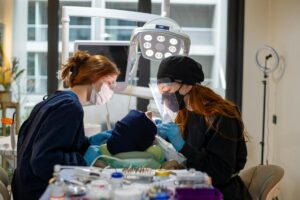
 The education of healthcare is evolving more rapidly than most people think. Students can no longer afford to memorize textbooks, pass board tests, and expect hospital routines to remain unchanged. Technology influences diagnosis, and patients arrive informed and expecting clear communication. Care is delivered by teams, not individuals working in isolation.
Training for Clinical Agility
The sphere of medical knowledge is continuously growing. Principles shift. New methods emerge. No student can learn everything and remain effective throughout an entire career. The ability to react, interpret information quickly, and make sound decisions is what matters most.
Smarter learning environments emphasize reasoning over recall. Case-based learning, adaptive quizzes, and timed clinical scenarios require students to prioritize information. They are trained to make decisions with incomplete data and explain why one diagnosis may be more likely than another.
Digital resources contribute to building this mental flexibility. Many students supplement coursework with structured online systems such as exam preparation tools that support focused study, time management, and pattern recognition. These platforms are not simply about memorizing facts. They help learners identify weaknesses and refine their clinical thinking process.
The result is a graduate who adapts quickly to changing conditions. They analyze situations carefully and respond with confidence instead of relying on memorized answers.
Utilizing Immersive Simulation to Build Emotional Readiness
Technical competence alone does not prepare students for the realities of patient care. Healthcare professionals encounter stress, emotional families, urgent decisions, and unexpected complications. Emotional readiness is just as important as knowledge.
Simulation environments help bridge this gap. Students participate in realistic scenarios such as admitting a patient during a cardiac emergency or responding to a sudden decline in condition. These exercises create urgency and demand clear communication. Small mistakes produce visible consequences in a safe environment.
Immersive learning spaces supported by high-quality audiovisual systems are becoming central to many institutions. Advanced AV technology allows instructors to record sessions, replay critical moments, and evaluate tone, body language, and reaction time. Watching playback can reveal hesitation before initiating CPR or unclear instructions during a crisis.
Repeated exposure to controlled stress builds composure. Students become more comfortable thinking clearly under pressure. Communication patterns strengthen. Confidence grows gradually, reducing the shock often associated with first high-stakes clinical experiences.
Redesigning Hierarchy Through Interprofessional Learning
Healthcare delivery depends on teamwork. Physicians, nurses, pharmacists, therapists, and technicians each contribute specialized expertise. Traditional education, however, often trains these professionals separately. This separation can reinforce rigid hierarchies and communication barriers.
Smarter learning environments intentionally bring disciplines together. Students collaborate in simulations and structured discussions. They practice standardized communication methods and learn how to voice concerns respectfully.
For example, when a nursing student questions a medication dosage during a joint exercise, the scenario becomes a lesson in shared accountability. The focus shifts from hierarchy to patient safety. Over time, learners grow comfortable sharing insights and supporting one another.
This approach reduces future medical errors linked to miscommunication. It also fosters mutual respect early in training. Graduates enter the workforce understanding that safe care depends on collaboration rather than individual authority.
Providing Data-Driven Feedback for Reflective Practice
Feedback drives growth. In traditional models, students may receive general comments such as “good job” or “needs improvement.” Smart systems provide more specific and measurable insights.
Performance analytics can track how long a student takes to make a clinical decision, how often they interrupt a patient during interviews, or whether unnecessary tests are ordered in a simulated case. These details deepen self-awareness.
With access to this data, students recognize patterns in their behavior. Someone who hesitates before initiating emergency procedures can practice faster recognition. Another who dominates conversations can intentionally develop stronger listening skills.
This reflective approach promotes consistent improvement. Feedback remains constructive because it is specific and actionable. Over time, learners build the habit of evaluating their own performance, a skill essential in a profession that demands lifelong learning.
Reimagining Professional Identity in the Age of Intelligent Systems
Technology now assists with diagnostics, documentation, and patient monitoring. Artificial intelligence tools can flag abnormalities or suggest potential conditions. As these systems become more common, healthcare professionals must redefine their roles.
Smarter learning environments prepare students to collaborate with intelligent systems rather than depend on them blindly. Learners examine how algorithms function, identify potential biases, and understand why human judgment remains critical. They also practice explaining machine-generated insights to patients in clear and compassionate language.
Training expands beyond individual cases. Students analyze population health data and explore how factors such as income, education, and housing affect outcomes. This systems-thinking perspective broadens their understanding of care. Treatment becomes more than addressing symptoms. It includes recognizing social and environmental influences on health.
In this evolving model, professional identity shifts. Future clinicians become interpreters of data, ethical decision-makers, and effective communicators. Their value lies in combining technical knowledge with empathy and contextual awareness.
Conclusion
The next generation of healthcare professionals will face increasingly complex responsibilities. Their preparation must reflect that reality. By redesigning how students learn, educators are shaping clinicians who think critically, communicate effectively, and adapt confidently throughout their careers.
This transformation represents one of the most significant advances in modern healthcare education. It is not merely about new tools or technologies. It is about cultivating professionals prepared to meet the evolving demands of patient-centered care.