


How is United Imaging Healthcare impacting medicine with its advanced scanners and imaging systems?
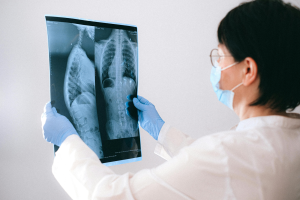 As an innovation leader in MRI and CT scanners, PET/CT scanners, and digital analytical systems, United Imaging Healthcare is transforming the way hospitals, clinics, and diagnostic teams work. Advanced scanners produce extremely accurate images in less time with less radiation exposure, significantly improving safety and the quality of care. Meanwhile, AI-powered software improves data analysis, helping physicians to make well-informed clinical decisions quickly. The company’s impact on modern medicine is evident in its ability to combine technological advancement with practical support for medical teams.
New dimensions of precision diagnostic imaging
In diagnostic imaging, precision means the ability to capture key details that determine diagnosis, treatment and prognosis. United Imaging is redefining this concept by providing systems that enable the dynamic analysis of changes over time while offering high spatial resolution. This means sharper images combined with the ability to track subtle metabolic, neurological, or oncological differences with unprecedented accuracy. Diagnosis becomes a tool for prediction and personalising therapy, rather than merely confirmation.
Technology provides a shortcut between examination and medical decision-making
In many medical facilities today, the problem is not access to equipment, but rather the time taken between conducting an examination and making a clinical decision. UIH provides systematic solutions that reduce this time. Lightning-fast data processing, integrated segmentation and lesion classification algorithms, and automated image reconstruction capabilities make diagnosis consistent and almost instantaneous.
As a result, patients are referred to the right specialist faster, and physicians have all the necessary information at their disposal from the first appointment. This operational model not only saves time, but also ensures more accurate decisions and better treatment outcomes.
Role of artificial intelligence in interpreting results
The purpose of artificial intelligence in medical imaging is not to replace physicians, but to free them from routine analysis so they can focus on issues that require attention. The algorithms incorporated in United Imaging systems can recognise anatomical structures, detect abnormalities and compare them with databases, suggesting clinical classifications in real time.
Moreover, AI does not work in isolation. It is a customisable supporting tool that can be adapted to meet the needs of individual facilities and physicians. This improves not only the quality of interpretation, but also the repeatability and efficiency of the entire process.
State-of-the-art MRI and CT scanners
Advanced MRI and CT systems are not only faster nowadays, they are also smarter and more flexible.
In magnetic resonance imaging, techniques that speed up image acquisition without compromising quality are gaining particular importance. These include reconstruction based on data from previous sequences and machine learning that assists signal decoding.
In computed tomography, on the other hand, the development of high-performance detectors, such as next-generation photosensitive detectors, enables examinations to be performed with lower radiation doses while ensuring better structural data quality. This improves not only the quality of the images, but also their range of applications. As a result, diagnostics become available to patient groups that previously required special care, such as children, the elderly, and cancer patients.
What is next for imaging development?
In diagnostic imaging, the coming years will see a shift from reactive to predictive technologies. Imaging is no longer just a tool for confirming disease; it is increasingly used for preventing and detecting risk early on. United Imaging Healthcare is already investing in platforms that combine imaging data with laboratory results, as well as patients’ genetics and medical histories. This will not only provide more accurate images, but also contextual clinical decision support systems that can interoperate with the entire medical data ecosystem.
This is a step towards data-driven medicine and creating individual patient health profiles, from which both the system and all of us will benefit.